


Ta strona korzysta z plików cookie.Używając tej strony wyrażasz zgodę na używanie plików cookie, zgodnie z aktualnymi ustawieniami Twojej przeglądarki. Możesz dowiedzieć się więcej w jakim celu są używane oraz o zmianie ustawień przeglądarki. kliknij tutaj

09/08/2021
Type R foams as a soundproofing material
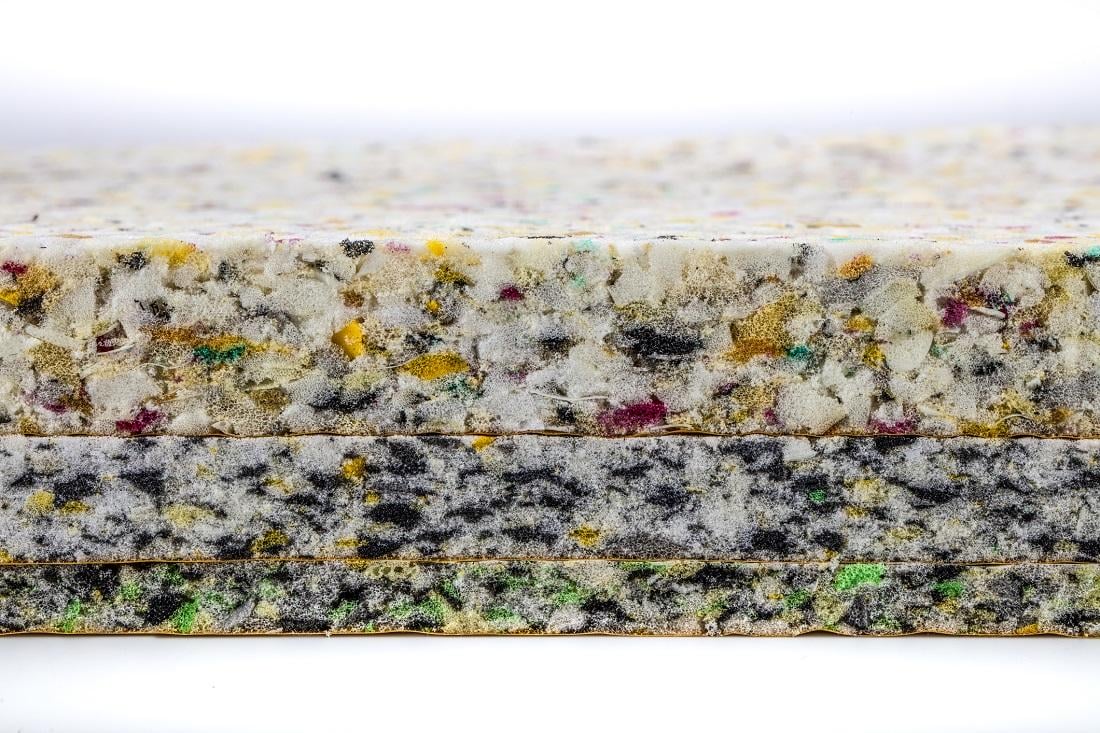
Noise is a factor that negatively affects health, and its high intensity leads in a short time to serious damage to hearing. Quieter sounds that affect the body for a long time can also be harmful. Many problems are also caused by the way sound propagates and the reverberation created in rooms, caused by secondary reflections of sound waves. The way to better control the extent to which sound waves affect the environment is to use appropriate sound-absorbing materials. Soundproofing type R foams are a good example here. Let’s take a closer look at them and see how they work.
What are Type R foams?
Type R foams are rebound polyurethane foams called Rebound foams. They are created in the recycling process of PU foams, which uses shredded foam fragments. A typical foam production technology consists in combining polyesters or polyethers containing free hydroxide groups with an isocyanate while foaming the mixture in the presence of water, which decomposes into hydrogen and oxygen. In the formation of Rebound foams, the crushed fragments are combined with an isocyanate binder, which is then re-foamed. Polyurethane foam can have the structure of open or closed cells. Rebound foams are open-cell foams, so they are characterised by high flexibility and a very soft porous structure. They are also resistant to acids and alkalis, and are distinguished by excellent thermal insulation properties. The properties of foams make them commonly used as upholstery and insulation materials.
Soundproofing properties of Type R foams
The high flexibility of Rebond foams makes them ideal for use as a soundproofing material. The structure of the foam is able to absorb sound waves, which are converted into vibrations within it. Thanks to the structure of the foam-forming polyurethane, the particles can be made to vibrate, which changes the energy of the sound waves into heat, and thus disperse. Type R PU foams are used to produce acoustic panels that can be easily attached to walls and ceilings in rooms exposed to noise or reverberation.